Health and Safety Policy — Commercial Waste Neasden
This policy sets out the commitment of the company to maintain high standards of health and safety across all commercial waste operations. It applies to all staff, contractors and anyone affected by our commercial refuse and rubbish collection activities. The objective is to minimise risk, prevent injury and protect property while delivering reliable waste management services in and around our service area.Our approach combines clear leadership, documented procedures and continual improvement. The policy acknowledges statutory duties and industry best practice without focusing on local legal minutiae; instead it emphasises practical measures that protect people and the environment. All employees have a role to play in the safe collection, transportation and disposal of commercial waste.
 Risk assessment is central to our health and safety system. Routine and task-based risk assessments identify hazards associated with rubbish removal, bin handling, vehicle operations and hazardous or mixed waste streams. Controls are implemented following the hierarchy of risk control, with elimination, substitution, engineering controls, administrative controls and personal protective equipment (PPE) used as appropriate.
Responsibilities are assigned at all levels. Management must provide adequate resources, training and supervision, while supervisors ensure that operational staff follow procedures. Employees are required to follow safe working practices, report hazards and incidents, and use PPE correctly. Visitors and temporary staff are briefed on site-specific rules before work begins.
Training and competence
Training is provided to ensure competence in commercial waste handling. This includes correct manual handling techniques, safe use of lifting and containment equipment, vehicle loading and securing, segregation of recyclable and non-recyclable materials, and awareness of hazardous substances. Refresher training and toolbox talks are scheduled regularly to maintain skills and knowledge.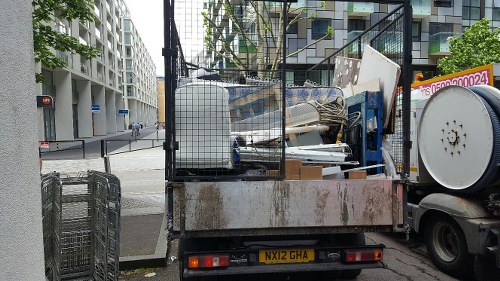 Operational controls include written procedures for collection routes, vehicle checks, weight limits, and lock-out/tag-out protocols for equipment maintenance. All drivers perform pre-shift vehicle inspections and log defects. Loading and unloading areas are assessed for surface condition and pedestrian interface to reduce slips, trips and falls. Where mechanical aids are available they are used to reduce manual handling risks.
Personal protective equipment and hygiene
Appropriate PPE is provided and mandatory where risk assessments indicate it is required. Typical PPE includes high-visibility clothing, safety footwear, gloves suitable for waste types handled, eye protection and hearing protection where necessary. Staff are trained in PPE selection, proper fit and care. Good hygiene practices are emphasised to reduce contamination risks.Specific procedures cover the handling of hazardous or specialist waste streams such as chemical containers, sharps or items suspected of contamination. These procedures include segregation, secure containment, labeling and transportation in accordance with permit and carrier obligations. Only trained personnel handle regulated streams, and emergency arrangements are in place for spills or exposures.
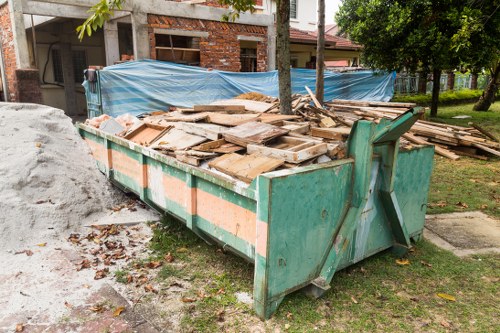 Equipment, vehicle and depot safety are integral. Vehicles are maintained to a high standard with scheduled servicing and documented inspections. Depot areas are kept organised with clear segregation between storage, maintenance and traffic zones. Fire safety, safe stacking of containers and appropriate storage of fuels and lubricants are managed with controls to prevent ignition and contamination.
 Incident reporting and investigation procedures ensure that no accident is ignored. Every incident, near miss or unsafe condition is reported promptly, investigated to determine root causes and followed by corrective actions to prevent recurrence. Lessons learned are communicated across the workforce and incorporated into updated procedures.
Monitoring, audit and review include routine site inspections, internal audits and periodic third-party reviews. Performance indicators such as incident frequency, training completion rates and vehicle defect logs are reviewed by management. This continuous monitoring supports a dynamic policy that adapts to operational changes and emerging risks.
Employee engagement is encouraged through safety committees, suggestion systems and regular briefings. Staff input is sought when developing or revising procedures to ensure practical, effective controls. Empowering employees to stop work in unsafe conditions is a core principle of the safety culture.
Implementation and governance—The policy is implemented through documented management systems that integrate health and safety into everyday operations. Senior management has overall responsibility for policy enforcement; line managers ensure procedures are applied consistently. Regular policy reviews are carried out to ensure continued suitability and effectiveness.
In summary, this Health and Safety Policy for commercial waste operations emphasises proactive risk management, clear responsibilities, competent staff and robust controls. It supports the safe delivery of rubbish collection and commercial waste services, reduces harm to people and property and contributes to environmental protection. Everyone associated with the operation is expected to understand and apply the policy.
Signed on behalf of the company: the organisation commits to providing resources and leadership required to make this policy effective and to review it periodically as operations evolve.
