Recycling and Sustainability for Commercial Waste Neasden
Our approach to Commercial Waste Neasden focuses on making the borough a recognised eco-friendly waste disposal area and a leading example of a sustainable rubbish area for businesses. We work with local authorities and waste partners to ensure that waste streams from offices, shops and light industry are diverted from landfill wherever possible. This page outlines our targets, processes, local transfer stations, charity partnerships and low-carbon transport options to support the circular economy in and around Neasden.
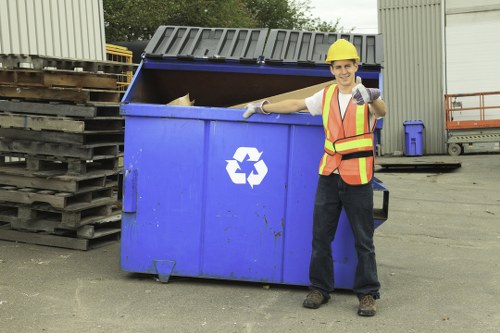 Target: we have set a recycling percentage target of 65% for commercial collections across Neasden by 2030, building on current municipal recycling schemes. That goal complements borough-wide strategies for waste separation, where dry recyclables, glass, and food waste are collected separately to maximise recovery.
How the Neasden area manages commercial waste
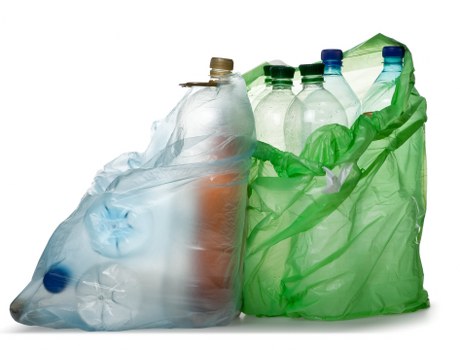 The typical Neasden commercial waste journey starts with segregation at source. Businesses are encouraged to separate paper and card, plastics, metals, food waste and bulky items. Our teams provide tailored bin types and clear signage so staff and contractors can follow the borough’s approach to waste separation. This reduces contamination and improves recycling yields for the entire local network.
To make the process transparent, we publish key performance indicators and route plans. These documents show which materials are collected, where they are transferred and the pathway to final processing. The result is an accountable system that helps the area become a true sustainable rubbish area.
Local transfer stations and processing
Neasden benefits from proximity to several local transfer stations and Materials Recovery Facilities (MRFs). These transfer points allow segregated loads to be consolidated and delivered to specialist processors for composting, recycling and reuse. By routing commercial collections through nearby transfer stations we shorten haul distances and increase the percentage of material that is recovered rather than landfilled.
Our logistics plans prioritise drop-offs at certified facilities that accept mixed dry recyclables, glass, organics and construction waste. For example, timber and construction debris from shop refits are separated and directed to specialist processors for reuse or energy recovery, while paper, card and plastics are sent to local MRFs for sorting.
We are proud of our partnerships with local charities and social enterprises that turn commercial waste into community benefit. Unsold textiles, kitchenware and reusable office furniture are diverted to charities and reuse centres across the borough. Working with these organisations reduces waste disposal costs for businesses while supporting local employment and refurbishment programmes.
Key partnership activities include:
- Donation streams for reusable items sent to local charities and social enterprises.
- Coordinated bulky waste collections that prioritise reuse before recycling.
- Refurbishment projects that create job training opportunities in Brent and neighbouring boroughs.
 To minimise emissions we operate a fleet of low-carbon vans and electric vehicles for kerbside collections and short transfers. Combining electric vans for inner-zone pickups with Euro 6-compliant light trucks for longer routes reduces the carbon footprint of each tonne of waste handled. We also plan route optimisation and load consolidation to shrink mileage and emissions further.
Vehicle choices are part of a wider sustainability programme that includes regular maintenance to preserve fuel efficiency, driver training in eco-driving, and investment in on-site electrification at partner premises to enable zero-emission pickups.
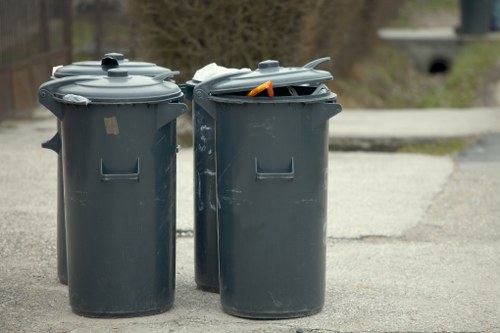 As part of the wider commercial waste strategy in Neasden, we emphasise continuous improvement and innovation. Businesses are offered clear recycling guidance, on-site waste surveys and custom collection frequencies to maximise participation. Our monitoring tools track the progress toward the 65% recycling target and identify opportunities to reduce contamination and increase reuse.
Creating a resilient, resource-efficient commercial rubbish Neasden environment requires cooperation. Landlords, tenants and service providers must commit to source separation and proper disposal. Simple actions — consistent bin labelling, frequent staff training and scheduled bulky item collections — make a measurable difference when aggregated across the commercial estate.
We also work closely with the borough’s waste strategy teams so that public and private efforts are aligned. This ensures that kerbside and communal commercial collections support municipal recycling programmes, such as separate food waste collections and dry mixed recycling, improving overall recovery rates for the borough.
In summary, the sustainable future of commercial waste management in Neasden relies on a clear target, smart logistics, local transfer station use, charity partnerships and an increasingly low-carbon fleet. Together these elements create a practical pathway to an eco-friendly waste disposal area and a model sustainable rubbish area for London businesses to follow.
